When I got married, I begged my mother for two things to take with me: her silverplate forks and her cast iron skillet.
My mother made the best fried potatoes. I had the idea that the skillet was part of why.
A few weeks into that first home, I washed it in the dishwasher. When it came out I stood there staring at it, not understanding what had happened. I didn’t know it could be re-seasoned. I didn’t know it could be saved. I threw it out, and I was heartbroken in a way that felt out of proportion to losing a pan.
But it wasn’t really about the pan.
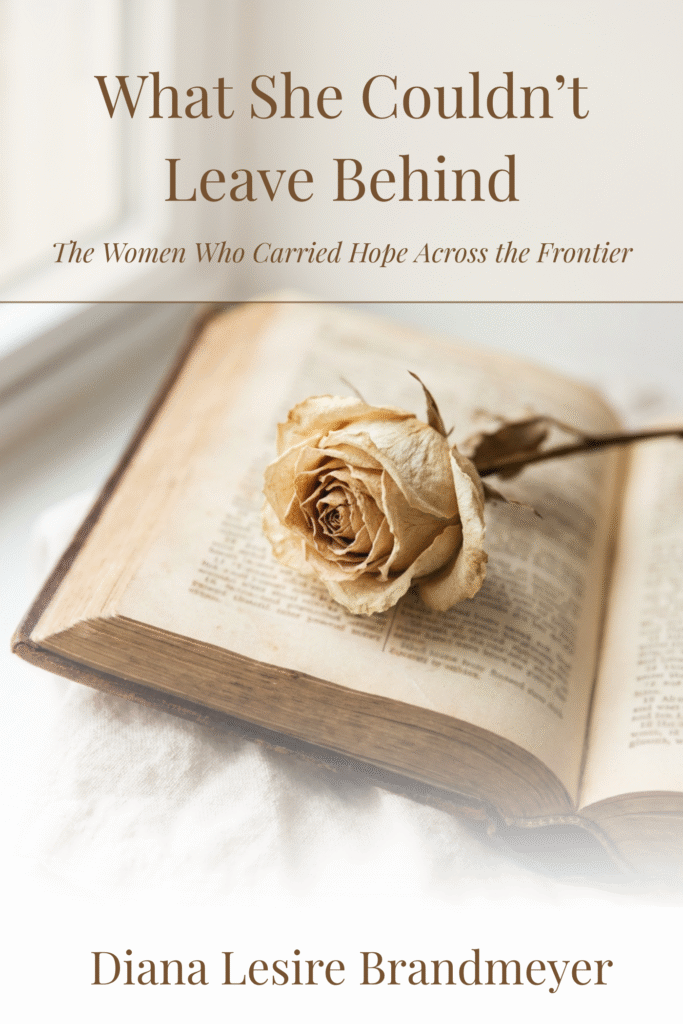
The Women Who Carried Hope Across the Frontier
That’s what I kept thinking about when I started writing about frontier women. A woman heading west in the mid-1800s could bring roughly 500 pounds of personal belongings. Everything else got left behind. Things she had packed herself, wrapped herself, argued to keep — left in the dust when the miles got long and the oxen gave out.
But she kept something. Always something small. Too important to leave behind no matter what the weight limit said.
What she kept tells you everything about who she was.
I wrote a short piece about those women — and about the women in my Frontier Legacy Brides series who carried that same kind of hope into uncertain territory. A little of my own story is in there too. It’s called What She Couldn’t Leave Behind: The Women Who Carried Hope Across the Frontier. It takes about ten minutes to read and it’s free.
Download What She Couldn’t Leave Behind here.
If you haven’t met the Frontier Legacy Brides yet, this is a good place to start before you read Book 1. And if you’ve already finished all six books, I wrote it for you too.
